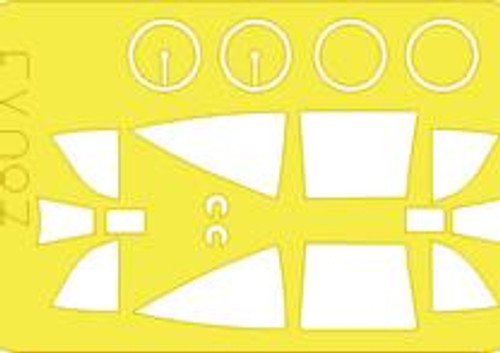


Description
In 1938, when military doctrine shifted from light fighter dogfighting to high-speed hit-and-run tactics, the Army issued an order to Nakajima to prototype the Ki-44, a high-speed heavy fighter that emphasized speed, climb rate, and dive performance, at roughly the same time as the order to prototype the Ki-43 light fighter.
To satisfy the Army's requirements, Nakajima chose a high-output engine, the Ha-41, which, although large in diameter, had the highest output at the time. This resulted in a wider nose and significantly reduced wing area for higher speeds. Nakajima also adopted its unique butterfly-shaped flaps on the trailing edge of the wings to improve performance during aerial combat and takeoff/landing.
Test results showed that pilots accustomed to the Type 97 fighter were confused by the poor visibility during takeoff and landing and the poor stability at low speeds, and the aircraft did not receive a good reputation. However, in performance comparisons with the Bf-109E and Kawasaki Ki-60, the Ki-44 was superior, and in 1942 it was officially adopted as the Type 2 single-seat fighter, later given the nickname "Shoki".
Aircraft equipped with the Ha-41 engine were designated as the Type 2 Single-Seat Fighter Model 1, while those equipped with the more powerful Ha-109 engine were designated as the Type 2 Single-Seat Fighter Model 2. Furthermore, the Model 2 was divided into three variants (A, B, and C) based on differences in armament and equipment. A total of 1,227 aircraft of all variants were produced between 1940 and 1944, and they played an active role in air defense missions, intercepting enemy bombers.
Data Type 2 Single-Seat Fighter Model 2B
- Crew: 1
- Wingspan: 9.448m
- Length: 8.843m
- Height: 3.248m (horizontal)
- Gross Weight: 2,764kg
- Maximum Speed: 605km/h at altitude 5,200m
- Cruising Speed: 400km/h at altitude 4,000m
- Engine: Ha-109
- Takeoff Power: 1,520hp
- Armament: 2 x 12.7mm cannons (fuselage), 2 x 40mm cannons (wings), 2 x 30kg-100kg
- bombs